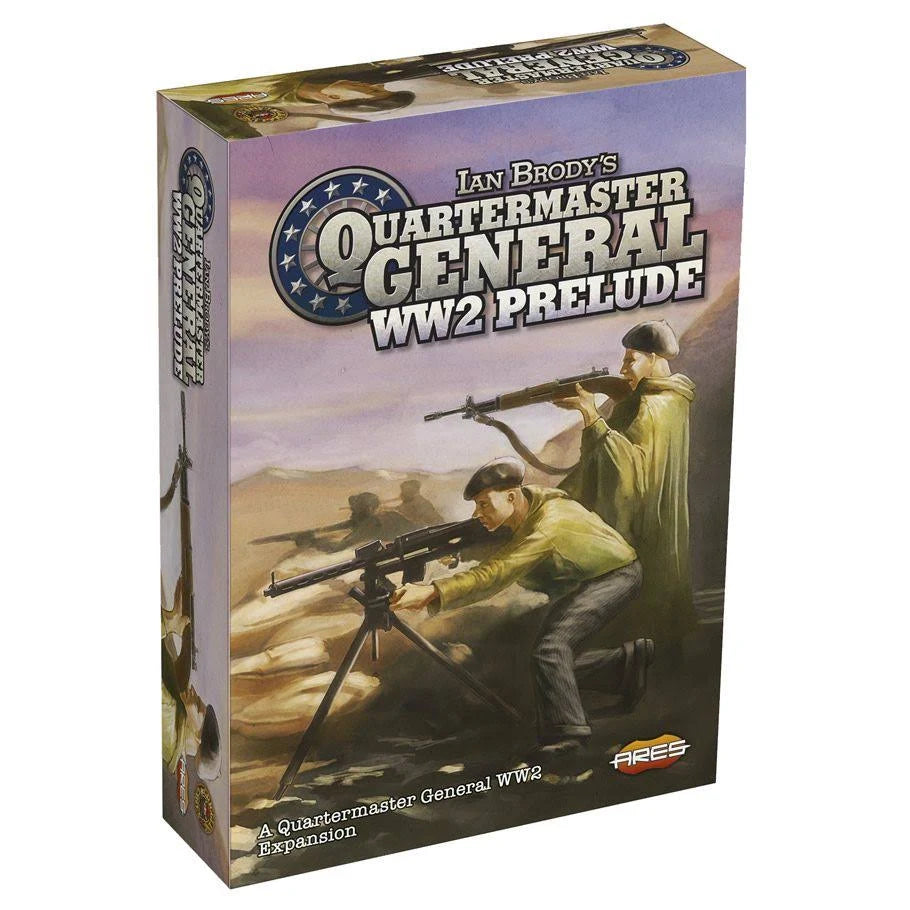

Quartermaster General: WW2 PRELUDE
Quartermaster General: WW2 PRELUDE
Couldn't load pickup availability
Quartermaster General: WWII Prelude
In the years leading up to the Second World War, the role of the Quartermaster General (QMG) became increasingly important as governments anticipated another large-scale, industrial conflict. Lessons learned from the First World War highlighted that logistics, supply, and organisation would be just as decisive as battlefield tactics.
Preparation and planning
During the interwar period, the Quartermaster General was heavily involved in planning for mobilisation. This included:
-
Stockpiling food, uniforms, fuel, and equipment
-
Planning the rapid expansion of armies from peacetime forces to mass conscript forces
-
Developing systems for transport and supply, including rail, road, and port facilities
Modernisation
Advances in technology meant the QMG had to adapt to new demands:
-
Increased reliance on motorised transport rather than horses
-
The need to supply tanks, aircraft, and mechanised units, especially fuel and spare parts
-
Coordination with industry to ensure continuous production of military supplies
Strategic role
By the late 1930s, the Quartermaster General had become a key strategic figure within military high command. War plans were assessed not only for tactical soundness, but also for logistical feasibility. A successful campaign now depended on whether supply lines could be maintained over long distances and under enemy attack.
Significance
The preparations made by Quartermaster Generals in the pre-war years laid the foundation for wartime success or failure. When World War II began, armies that had planned effectively were able to mobilise faster, sustain operations longer, and fight more efficiently, proving that logistics was central to modern warfare.
Zone: E4
Share