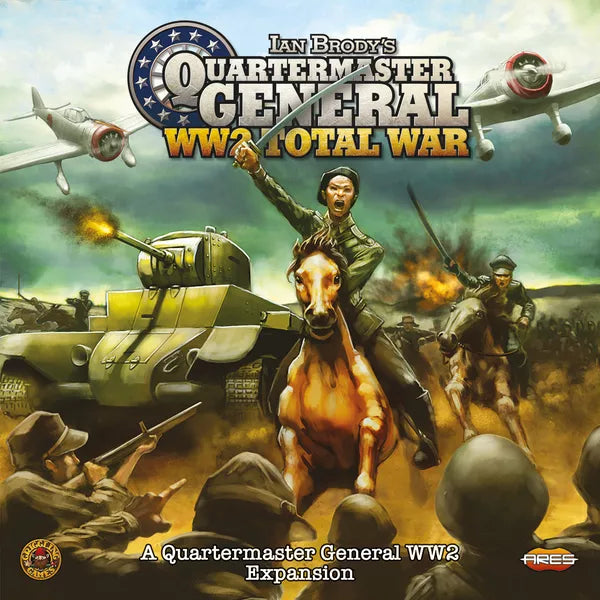

A Quartermaster General WW2 Expansion
A Quartermaster General WW2 Expansion
Couldn't load pickup availability
During the Second World War, the role of the Quartermaster General (QMG) expanded greatly due to the scale, speed, and global nature of the conflict. Modern, industrialised warfare required armies to be supplied continuously across vast distances, often on multiple fronts at the same time.
Expanded role in World War II
The Quartermaster General was responsible for the planning, organisation, and execution of military logistics on an unprecedented scale. Key responsibilities included:
-
Supplying food, uniforms, weapons, ammunition, fuel, and medical stores
-
Managing transport systems, including railways, trucks, ships, and later air transport
-
Overseeing storage, depots, and distribution networks
-
Providing accommodation and facilities for troops at home and overseas
-
Ensuring armies could move and fight effectively without shortages
Unlike earlier wars, World War II required coordination with industry, civilian transport, and allied nations, meaning the QMG often worked closely with governments, factories, and international partners.
Strategic importance
In WWII, logistics became a decisive factor in victory or defeat. Operations such as D-Day, the North African Campaign, and the Pacific island-hopping campaign depended on careful logistical planning. The Quartermaster General’s work determined:
-
How quickly armies could advance
-
How long they could sustain combat
-
Whether large-scale operations were even possible
Overall significance
By World War II, the Quartermaster General was no longer just an administrator but a key strategic planner. Effective logistics under the QMG helped turn military plans into reality, proving that modern wars were won not only by soldiers at the front, but by the systems that supported them.
Zone: E4
Share